-
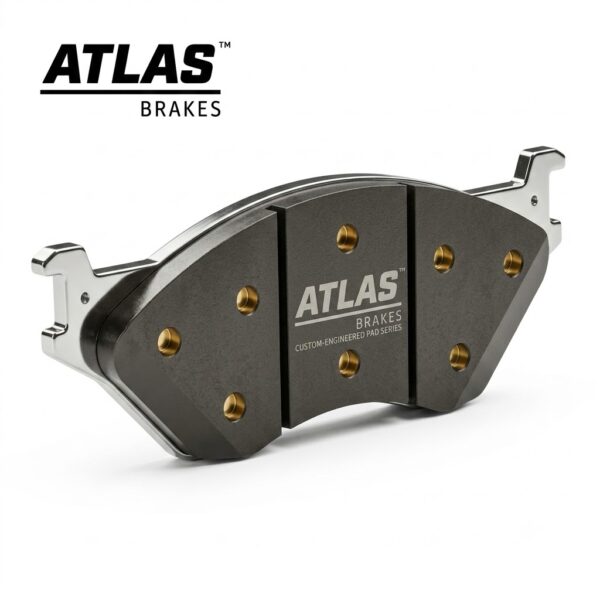
2001 – 2006 | Chevrolet Silverado 2500HD/3500HD | Atlas Premium High-Durability Front Brake Pads
-
2001 – 2006 | Chevrolet Silverado 2500HD/3500HD | Atlas Premium High-Durability Front Brake Pads
-
2001 – 2006 | Chevrolet Silverado 2500HD/3500HD | Atlas Premium High-Durability Rear Brake Pads
-
2001 – 2006 | Chevrolet Silverado 2500HD/3500HD | Atlas Premium High-Durability Rear Brake Pads
Frequently Asked Questions About Brake Pads
How do I know which brake pads fit my vehicle?
The easiest way to find matching brake pads is by using our Year, Make, Model search tool at the top of our page. Because brake pads are not universal, they are strictly engineered around your vehicle's specific caliper design. You can also look up your vehicle’s Original Equipment (OE) part number in your owner's manual or check the exact trim level of your vehicle, as brake sizes can vary between standard and sport editions.
What is the difference between ceramic, semi-metallic, and organic brake pads?
Choosing the right friction material depends on your driving style and vehicle type:
| Feature | Ceramic Brake Pads | Semi-Metallic Brake Pads | Organic (NAO) Brake Pads |
|---|---|---|---|
| Best For | Daily drivers, luxury cars, commuting | Heavy-duty trucks, towing, track racing | Budget-conscious driving, light cars |
| Noise Level | Extremely quiet | Can be noisy/squeal | Quiet |
| Brake Dust | Very low (light colored) | High (dark metallic dust) | Medium |
| Heat Tolerance | Moderate | Excellent (resists brake fade) | Low |
| Rotor Wear | Gentle | Aggressive | Very gentle |
How often do brake pads need to be replaced?
On average, brake pads last between 30,000 and 70,000 miles. However, their exact lifespan depends heavily on your driving habits, vehicle weight, and environment. Stop-and-go city driving, mountain driving, and aggressive braking will wear pads down much faster than highway cruising. We recommend inspecting your brakes at every oil change or at least once a year.
What are the signs that my brake pads are worn out?
You should replace your brake pads immediately if you notice any of the following symptoms:
- Squeaking or squealing: Caused by the built-in metal wear indicator scraping the rotor.
- Grinding noise: Metal-on-metal contact, meaning the pad material is completely gone (danger zone).
- Spongy brake pedal: The pedal feels soft or sinks closer to the floor than usual.
- Vibration when braking: Often indicates warped rotors caused by excessive heat.
- Dashboard warning light: Many modern vehicles feature sensors that trigger a brake wear light.
What is the minimum safe thickness for brake pads?
Brand new brake pads typically have a friction material thickness of about 12mm. The absolute minimum safe thickness is 3mm (roughly 1/8 inch). If your pads are measured at 3mm or less, they need to be replaced immediately to prevent brake failure and costly damage to your brake rotors and calipers.
Do I need to replace rotors every time I change brake pads?
Not always, but it is highly recommended. If your current rotors are smooth, have no deep grooves, and meet the manufacturer’s minimum thickness requirements, they can sometimes be resurfaced ("turned") or left alone. However, installing new brake pads on worn or uneven rotors can cause premature pad wear, brake pulsations, and noisy operation. For the best performance and safety, replacing pads and rotors as a matched set is the safest bet.
Do brake pads come in a set for the front or rear, or all four wheels?
Brake pads are sold in axle sets. This means one box of "Front Brake Pads" contains 4 pads total—enough to service both the front-left and front-right wheels. Similarly, a "Rear Brake Pads" set covers both rear wheels. You should always replace brake pads on both sides of the axle at the same time to ensure even, balanced stopping power.
Why are my brand-new brake pads squeaking?
New brake pads can squeak for a few reasons. The most common cause is that they haven't been properly "bedded in" yet. Other causes include a lack of anti-seize brake lubricant on the metal backing plates/contact points, loose anti-rattle clips, or moisture and morning rust buildup on the rotors. If the squeaking persists past a few days of normal driving, the brake hardware should be inspected.
What is the "bedding-in" or "burnishing" procedure for new brakes?
Bedding-in is the process of mating your new brake pads to the surface of the rotors. To do this safely on an open, safe road:
- Perform 4 to 5 aggressive decelerations from 40 mph down to 10 mph without coming to a complete stop.
- Follow this with a few minutes of driving without using the brakes to let them cool down.
- Note: Avoid making full stops while the brakes are scorching hot, as this can transfer uneven pad material to the rotor, causing future vibrations.
Are premium brake pads worth the extra money?
Yes. Premium brake pads utilize advanced material formulations, multi-layer noise-dampening shims, and pre-chamfered designs that budget pads lack. Investing in premium pads results in a significantly quieter ride, drastically less brake dust on your wheels, shorter stopping distances, and a longer overall lifespan—ultimately saving you money on frequent replacements.
Can I change my car's brake pads myself?
Yes, replacing brake pads is a very common DIY project if you have mechanical experience and the proper tools (jack stands, socket wrenches, C-clamp or caliper piston compression tool). However, because brakes are your vehicle's most critical safety feature, you should only attempt this if you are entirely confident. Always consult your vehicle's service manual before starting.
Do new brake pads come with installation hardware and clips?
Many of our premium brake pad sets include premium stainless-steel hardware kits, anti-rattle clips, and synthetic brake lubricant. However, economy or budget pad options may only include the pads themselves. Please check the "What's in the Box" section on the specific product page to see if hardware is included for your vehicle model.
What happens if I keep driving with worn-out brake pads?
Driving on worn-out pads drastically increases your vehicle's stopping distance, putting you at a much higher risk of an accident. Furthermore, once the friction material wears completely away, the metal backing plate will gouge deep grooves into your brake rotors. This "metal-on-metal" contact generates intense heat that can damage your brake calipers and result in a repair bill that is hundreds of dollars more expensive than a simple pad replacement.
What is the difference between OEM and aftermarket brake pads?
OEM (Original Equipment Manufacturer) brake pads are identical to the pads that came with your vehicle from the factory. Aftermarket brake pads are built by third-party manufacturers. While some low-grade aftermarket pads are purely economy-focused, high-quality aftermarket brands often outperform OEM pads by offering specialized options like low-dust ceramics or high-bite semi-metallics tailored to your specific driving habits.
Do front brake pads wear out faster than rear brake pads?
Yes. Under normal braking conditions, your vehicle experiences a massive forward weight transfer. Because of this, the front brakes handle roughly 60% to 70% of the stopping workload. As a result, you will typically find yourself replacing your front brake pads twice as often as your rear brake pads.