Exploring the Core: Mechanical Properties of Gray Iron, with a Focus on Hardness and Engineering Significance
Introduction: Gray Iron’s Place in Engineering Materials
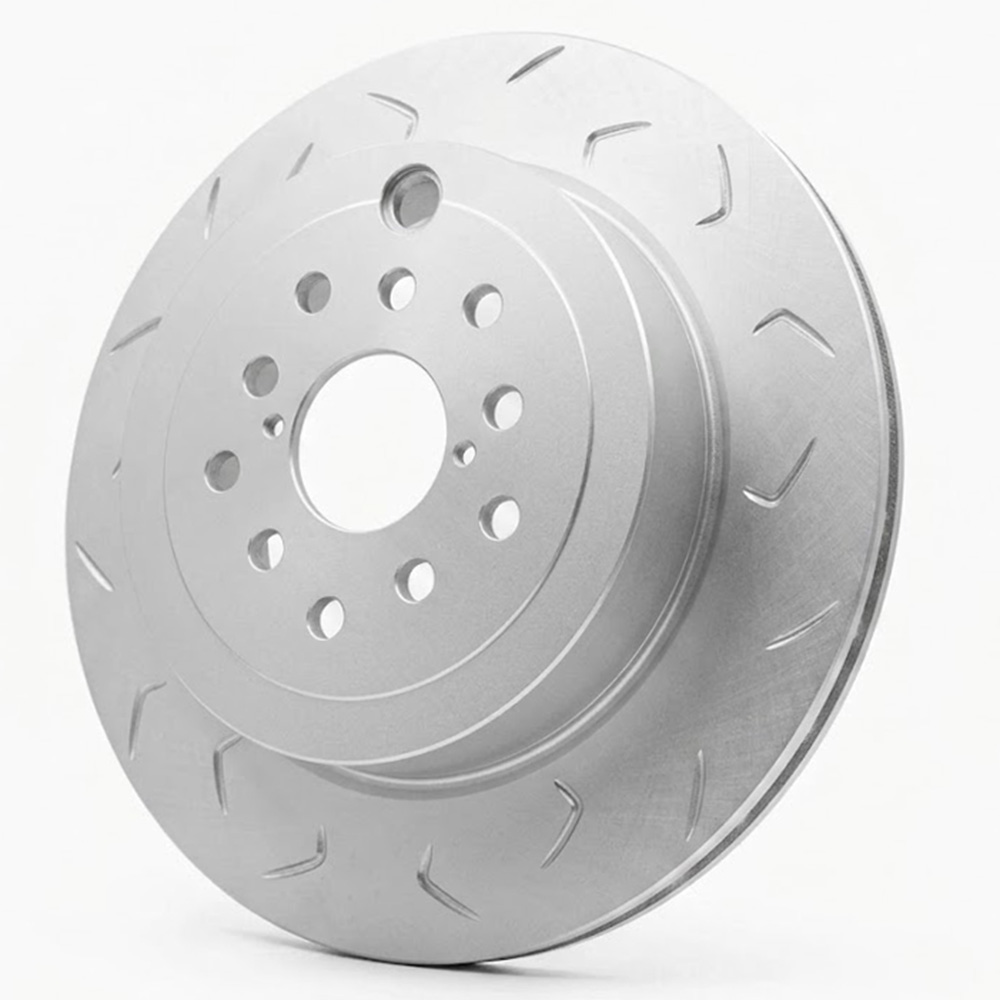
Gray iron stands as one of the most widely utilized ferrous casting alloys in the world, owing its popularity to a unique combination of characteristics: exceptional castability, high damping capacity, good wear resistance, and excellent machinability. These properties have secured its application across diverse industries, from automotive engine blocks and brake rotors to industrial machinery bases and components. The material’s distinctiveness stems from its microstructure, where a significant portion of the carbon precipitates as graphite flakes—a feature that both defines its utility and complicates the correlation of its various mechanical properties.
Understanding the full spectrum of mechanical properties of Gray Iron is critical for engineers who must design components to withstand complex loading, thermal cycling, and wear environments. The determination of these properties—strength, hardness, elasticity, and fatigue life—is the foundation of reliable component design. Among these, hardness is arguably the most frequently measured and readily available property, serving as a critical checkpoint in quality control and process consistency.
| Hardness Ranges for Gray Irons | ||
| Type of Gray Iron | Matrix Microstructure around Flake Graphite | Brinell Hardness |
| Soft-Annealed | All Ferrite | 110-140 |
| Ordinary | Pearlite and Ferrite | 140-200 |
| Higher Strength | Fine Pearlite | 200-270 |
| Alloyed | Bainite | 260-350 |
| Austenitic (Ni-Resist) | Austenite | 140-160 |
| Heat Treat Hardened | Martensite | 480-550 |
| Hardened and Tempered | Tempered Martensite | 250-450 |
| Chilled (white iron) | Pearlite and Carbides | 400-500 |
The Paramount Role of Hardness in Gray Iron Assessment
Hardness is defined as the resistance of a material to localized plastic deformation, such as indentation, scratching, or abrasion. In the realm of metallurgy and manufacturing, it holds a particularly high status because the test is simple, quick, and non-destructive to the bulk of the component. Furthermore, many other engineering properties—including ultimate tensile strength (UTS), wear resistance, and machinability—show a useful, though not always perfect, correlation with hardness.
Hardness as a Quality Control Indicator
For a given class or type of gray iron (where the chemical composition and processing are consistent), measuring hardness at a designated location on a casting provides an excellent and reliable method for establishing production consistency. By specifying a tight hardness range on a production drawing, manufacturers can indirectly monitor the material’s microstructure, heat treatment effectiveness, and overall mechanical soundness. This practice is commonplace because any significant deviation in the casting process—such as incorrect cooling rates or chemical composition drift—is often reflected immediately as a shift in the final hardness value.
The Correlation with Compression Strength
While the relationship between hardness and tensile properties can be nuanced, a particularly strong correlation exists between hardness and compression strength for all types of gray iron. The reason for this good correlation is fundamental to the nature of the hardness test itself: a standard hardness test (like Brinell or Rockwell) is essentially a localized compression test. The indenting material is pressed into the surface, and the resulting deformation is primarily controlled by the material’s ability to resist compressive forces. Given that gray iron possesses exceptionally high compressive strength—often three to four times its tensile strength—the hardness test provides a robust and direct measure of this characteristic.
Hardness Testing Standards and Practices for Gray Iron
The unique, heterogeneous microstructure of gray iron, composed of a metallic matrix (ferrite, pearlite, or a mixture) interspersed with soft, flake-shaped graphite, dictates the choice of suitable hardness testing methods.
The Brinell Hardness Test: The Preferred Method
The Brinell hardness test (HB) is the standard and most frequently used method for assessing the hardness of gray iron. The primary advantage of the Brinell test lies in its use of a large-diameter indenter (typically $10$ mm) and a significant load. This large indenter creates a proportionally large impression, which is crucial for gray iron because the impression is large enough to average the hardness of the microstructural constituents—the hard metallic matrix, the soft graphite flakes, and any other phases present. This averaging effect yields a reliable and representative bulk hardness value for the material.
Rockwell Hardness Testing: Use and Caveats
Rockwell hardness tests (HRC or HRB) can also be used, particularly on machined surfaces where the supporting base surface is also machined and flat. However, several precautions must be taken:
- Averaging is Essential: Due to the flake graphite, a single Rockwell indentation, which is smaller than a Brinell impression, might land primarily on a soft graphite flake or, conversely, on a hard, graphite-free metallic phase. This can result in an unrepresentative extreme value. Therefore, several Rockwell tests should be made and averaged, with extreme outlier values being discarded.
- Scale Selection: The appropriate Rockwell scale (B or C) must be chosen based on the expected hardness range.
The typical hardness ranges available in commercial gray iron castings, which encompass the wide variety of gray iron classes, are generally between $140$ HB to $260$ HB (Brinell Hardness). However, specially alloyed or heat-treated grades can achieve even higher hardness values.
The Complications of Hardness Conversion and Inter-Material Comparison
While hardness is an excellent intra-material quality control metric, challenges arise when attempting to correlate it to other properties or compare it directly to other metals.
Deviation in Rockwell-Brinell Conversions
For homogeneous metals like steel, standard conversion charts accurately translate Brinell hardness values to Rockwell values. However, for gray irons, deviations from the standard steel conversion relation occur, and this deviation tends to increase with higher carbon equivalent (CE) irons. The underlying cause is the graphite flakes:
- Differential Influence: The large graphite flakes influence the Brinell and Rockwell tests differently.
- Microhardness Evidence: This is evident when comparing microhardness tests on the metallic matrix of the iron to the standard bulk Rockwell C values. The microhardness test, with its minute impression, only measures the matrix, actively avoiding the graphite flakes. The resulting microhardness value is substantially higher than the bulk Rockwell C value, where the indenter’s deformation zone inevitably includes the softer graphite flakes, lowering the overall reading.
Consequently, any conversion chart used for gray iron must be specific to the particular grade and composition of the iron to maintain a reasonable level of accuracy.
Avoiding Direct Inter-Material Comparisons
A critical principle in materials engineering is that the hardness of gray iron should not be compared directly to the hardness of other metals (such as steel or aluminum) as an indication of properties like machinability or wear resistance.
- Machinability: A gray iron and a steel with the same Brinell hardness will have vastly different machinability ratings. The graphite flakes in gray iron act as a chip-breaker and a natural lubricant during cutting, giving gray iron a significant advantage in machinability despite its matrix hardness.
- Wear Resistance: Similarly, while hardness is an indicator of wear resistance, the specific microstructure matters more. The graphite flakes in gray iron lead to the formation of a fine, self-lubricating surface film under sliding wear conditions, which enhances its scuffing and seizing resistance far beyond what its static hardness value might suggest.
The Microstructure: The Master Key to Mechanical Properties
The true engineering properties of gray iron—including its elastic modulus, fatigue strength, and damping capacity—are ultimately determined by its microstructure, which is itself a function of both chemical composition (especially carbon and silicon content) and processing (specifically, cooling rate and subsequent heat treatments).
Composition and Processing Influence on Hardness
The hardness of gray iron is not static; it is significantly affected by:
- Matrix Type: A fully pearlitic matrix (lamellar iron-carbide structure) is significantly harder than a fully ferritic matrix (pure alpha-iron). Increased alloying elements (like manganese, chromium, or molybdenum) and faster cooling rates promote pearlite formation, increasing hardness.
- Graphite Flake Size (ASTM Size): Smaller, more numerous graphite flakes (finer size) tend to result in higher matrix strength and, consequently, slightly higher bulk hardness.
- Presence of Carbides: The presence of free carbides (cementite, $\text{Fe}_3\text{C}$), which can form due to low carbon equivalent, high cooling rates, or specific alloy additions (like chromium), drastically increases hardness. However, this increase in hardness comes with a significant negative trade-off: drastically reduced machinability. This is a classic case where the correlation between hardness and tool life breaks down—a small amount of carbide can reduce tool life much more than the corresponding increase in the Brinell hardness number.
Hardness and Tensile Properties: The Divergence
As noted, for an arbitrary comparison between different classes or types of gray iron, the simple hardness to tensile strength relationship is not useful.
- Graphite Flake Effect: The primary reason for this divergence is the differing effect of graphite structure on hardness versus tensile strength. The presence of graphite flakes acts as internal stress concentrators and essentially internal notches under tension, dramatically reducing the tensile load-bearing capacity of the metallic matrix.
- Decoupling: A finer, more numerous graphite structure might slightly increase hardness, but its effect on tensile strength can be much more severe (or less severe, depending on the orientation and shape of the flakes). Because tensile properties are so sensitive to the discontinuity created by the graphite flakes, the correlation with hardness—which is primarily a compressive measure—is significantly decoupled between different grades of iron.
Related Mechanical Properties and Their Link to Hardness
While not a perfect proxy, hardness is interlinked with several other key mechanical properties that define gray iron’s engineering utility.
Damping Capacity (Internal Friction)
Gray iron possesses a remarkably high damping capacity, meaning it can rapidly absorb and dissipate vibrational energy. This is directly attributable to the discontinuous, flake-like structure of the graphite. As stress is applied, the flake tips cause microscopic localized stress/strain cycles in the matrix, and energy is dissipated at the interfaces. While not directly measured by hardness, both high damping capacity and lower tensile strength are consequences of the same graphite microstructure that complicates hardness correlation. Components requiring vibration control, like machine tool bases, rely on this unique property.
Wear Resistance
The combination of a hard metallic matrix and the soft, lubricating graphite flakes makes gray iron an excellent wear-resistant material, particularly in conditions involving sliding contact. The flakes provide reservoirs for lubrication and shear easily to form a protective film. This property has a good, but indirect, link to hardness: higher matrix hardness (e.g., a fully pearlitic matrix) generally translates to better resistance to abrasive wear, which is a desirable trait in components like cylinder liners.
Modulus of Elasticity ($E$)
The Modulus of Elasticity ($E$) of gray iron is significantly lower than that of steel, which is due to the graphite flakes acting as voids that interrupt the load path. Unlike most metallic properties, the modulus of gray iron is not a constant value; it decreases as the stress increases (i.e., the stress-strain curve is not linear). Hardness provides little direct insight into the elastic modulus, which must be measured separately or estimated based on the specific iron class and its known graphite structure.
Conclusion: Hardness as the Linchpin of Gray Iron Quality Control
Hardness remains the linchpin of quality control for gray iron castings due to its ease of testing and strong indication of processing consistency.
- Production Consistency: For a specific gray iron formulation, specifying hardness at a designated location is the most effective way to ensure uniform quality across production batches.
- Compression Predictor: Hardness correlates exceptionally well with the high compressive strength of all types of gray iron, a testament to the fact that the hardness test is fundamentally a compression test.
- Microstructure Nuance: The limitations of hardness arise when comparing different grades or attempting to predict tensile properties, where the graphite flake structure exercises a dominant and differential influence that complicates cross-property correlation.
Effective engineering design utilizing gray iron requires recognizing these nuances: valuing hardness for its practical utility in quality assurance, but always deferring to the full metallurgical specifications and direct testing for critical properties like tensile strength and fatigue life. The story of gray iron’s mechanical properties is a fascinating case study in how a carefully controlled, heterogeneous microstructure—specifically the presence of graphite—can yield a material with a truly unique and highly valuable set of engineering characteristics.